From the artist:
After 3 years we are so proud to present to you our book, our first monograph, entitled “Works”. It is a comprehensive overview of how we came to hold our position at the forefront of avant-garde functional art. It has been a journey, and we are still very much riding it. This book is a mark for us, looking back to the beginning, the fabulous years of studying at Saint Martins legendary university in London and taking this knowledge and excitement for the future and just putting our first gears in and slamming our feet on the gas.
As so often we chose the side road, the bumpy, muddy road to unchartered territories that lead us to discover more, learn from the mistakes, and all in all press even harder down on the gas. It was fast, it was fun, exhilarating as we, alongside a few of our contemporaries, paved a line in the world of art that back then didn’t have much of a curriculum and history. We believe it was in many ways the lack of references that forced us away from the commercial production and we were pulled into the freedom we felt the art world gave us. We were not always good at finding the words to communicate what we actually were doing, but we are damn good at analysing, self criticism and with a hefty dose of art history and a continuous hunger to research, we trusted the good old gut and beating hearts to move forward with what we believed would add more value to this world. In hindsight what we were actually doing was to formulate our totem, our manifesto of how this road of ours would be carved.
Over the years we have formulated two main chapters in our work. The first chapter being the rigid, mature, often architecturally brutal language that must stand in coherent symbiosis, to sit as a carrier for the second – a gestural, quasi-abstract explosive avenue of our work, which we are perhaps most known for.
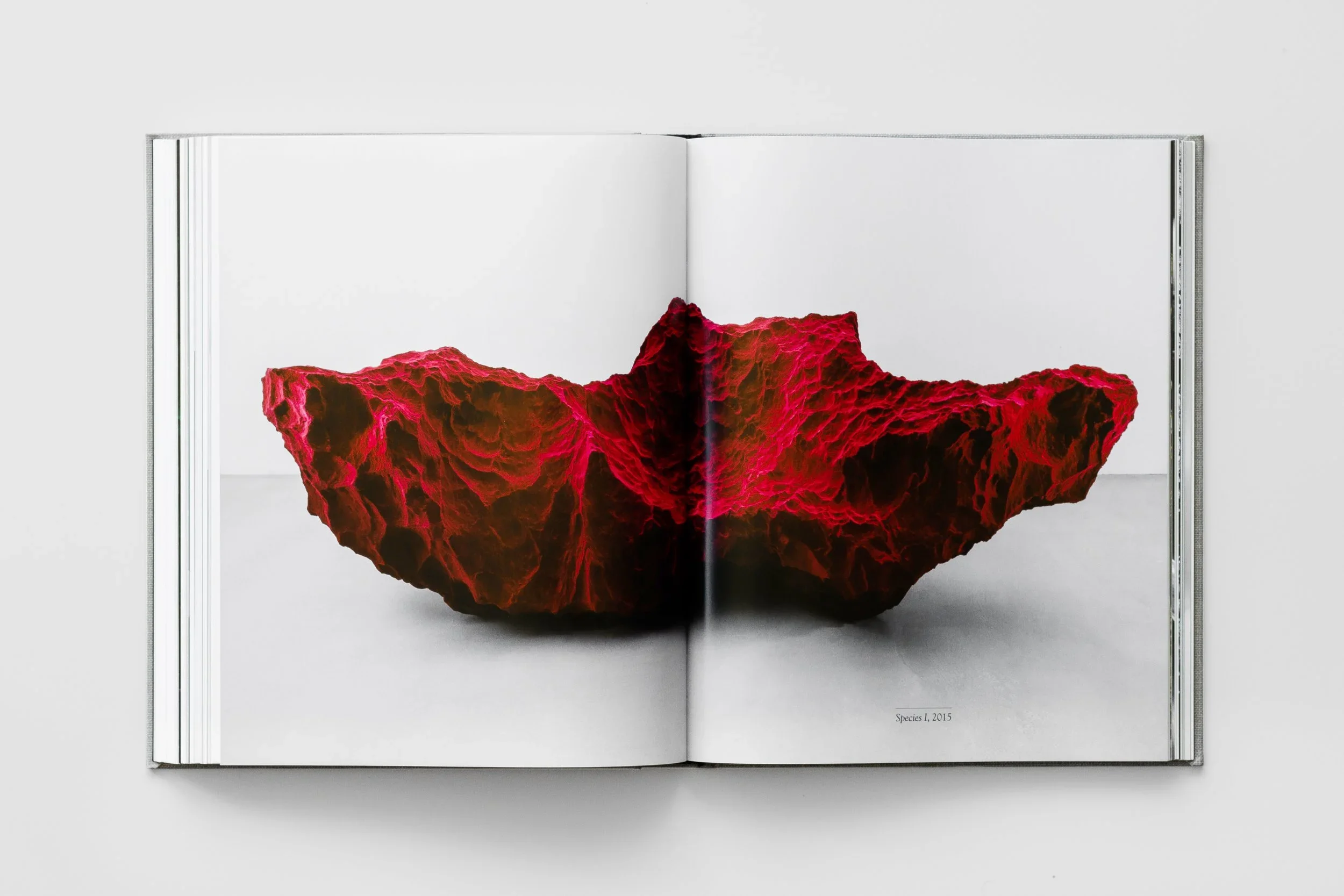
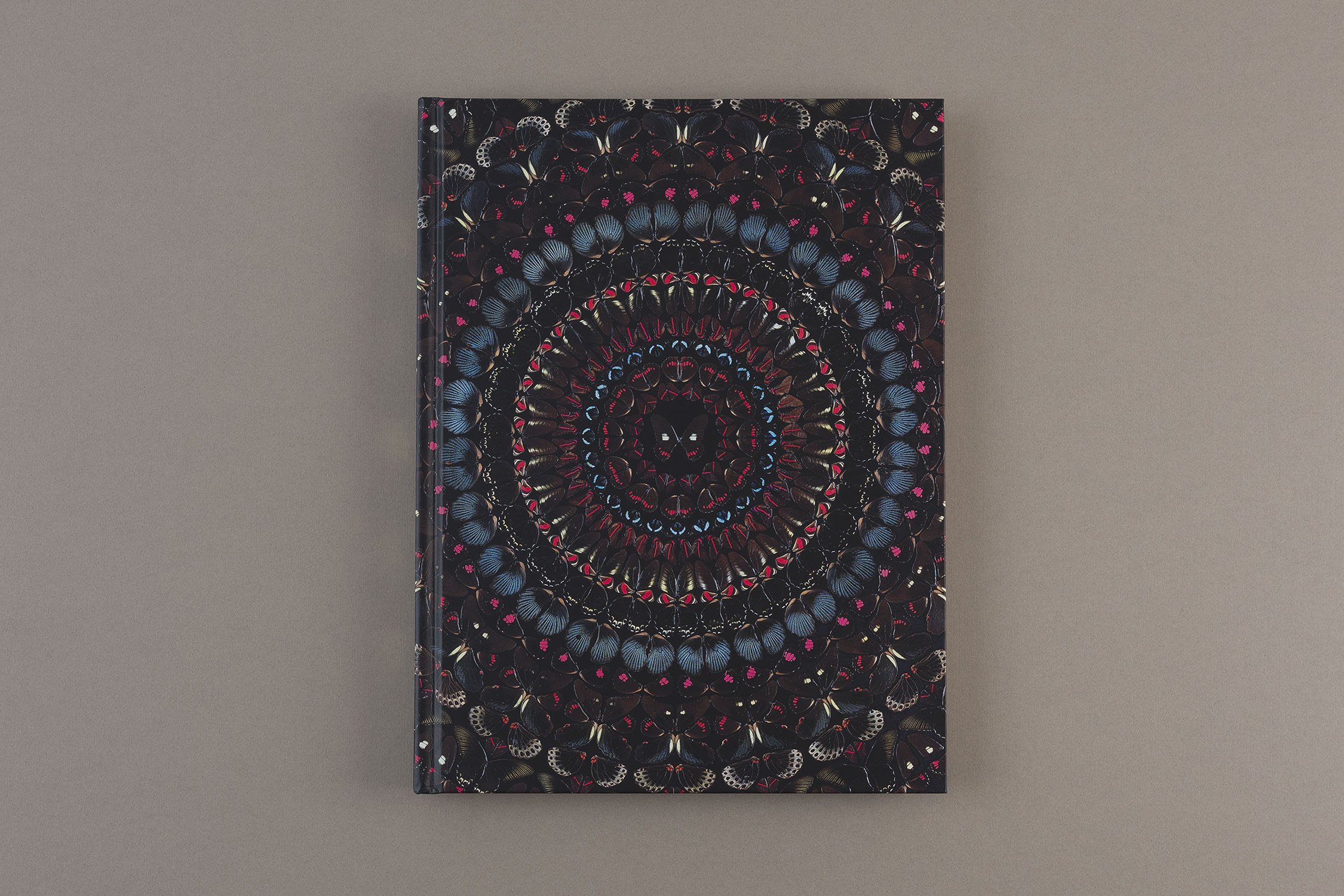
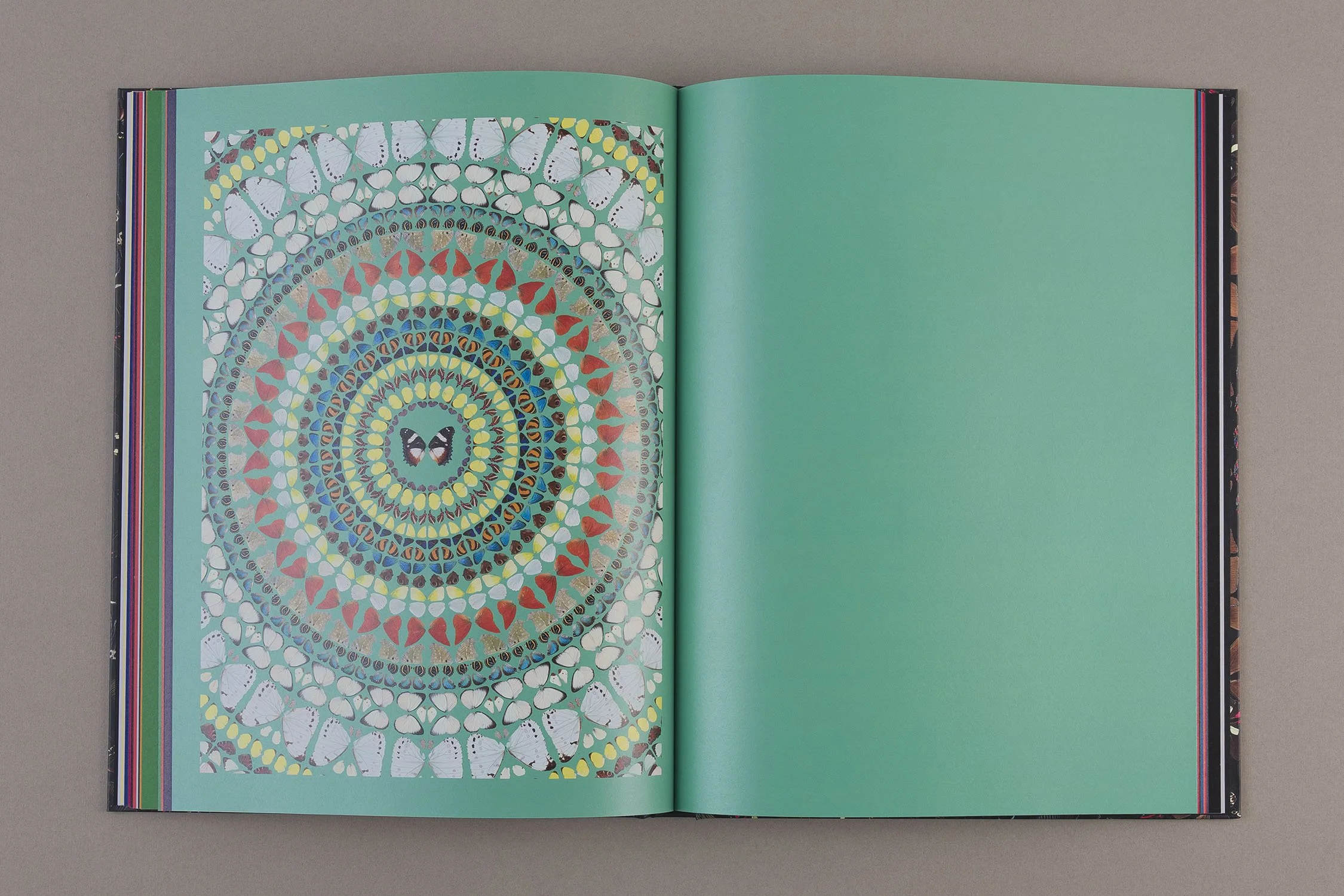
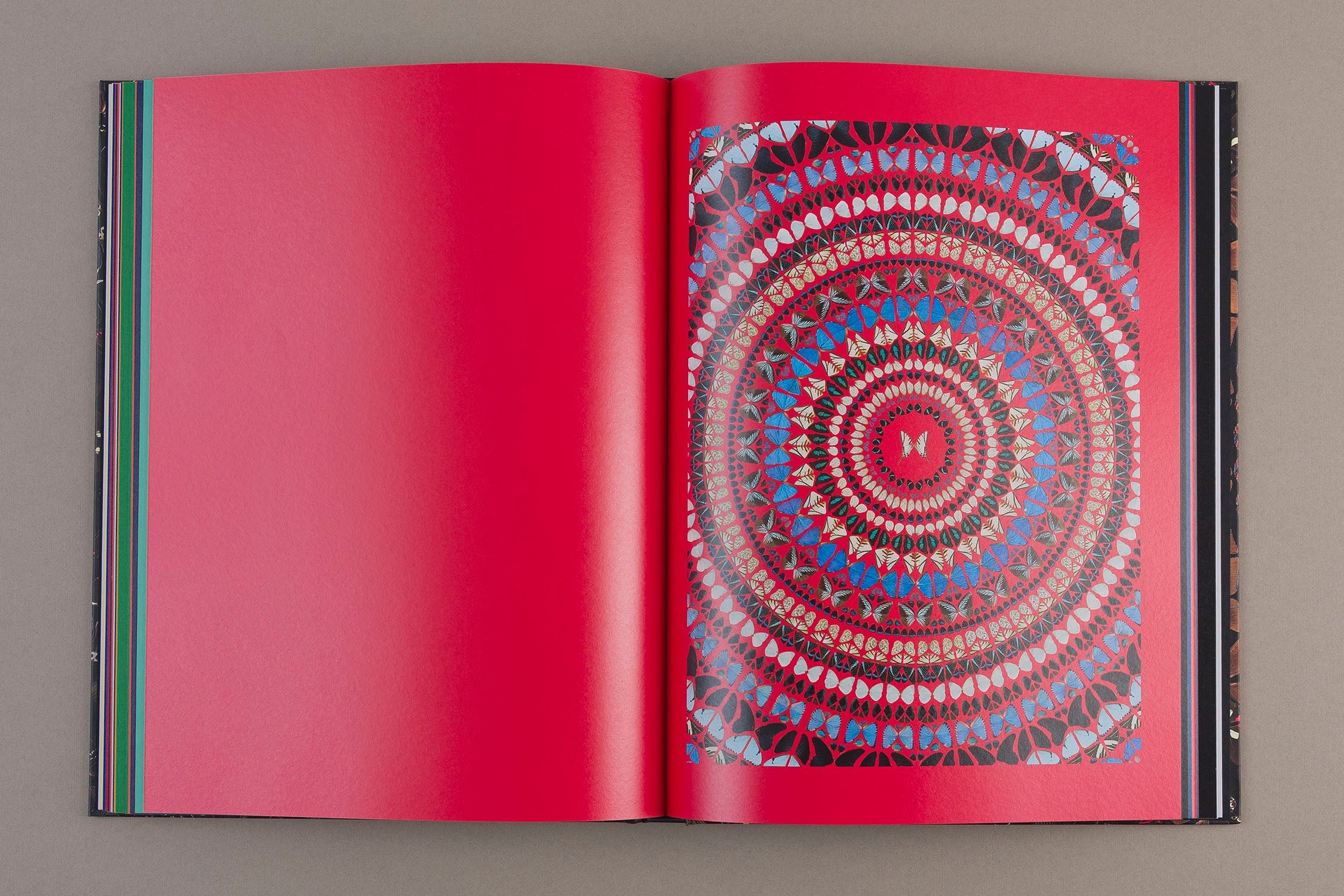
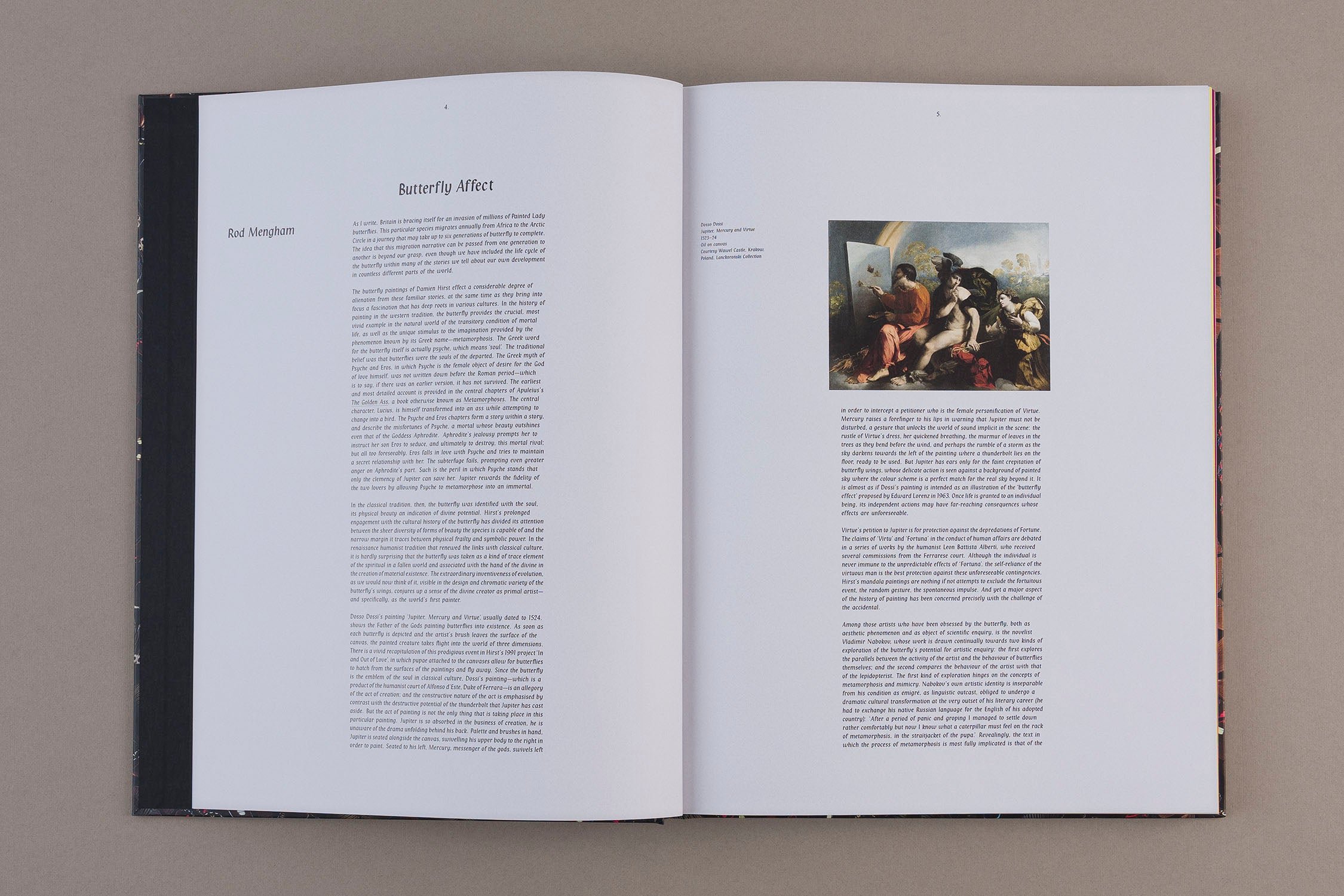
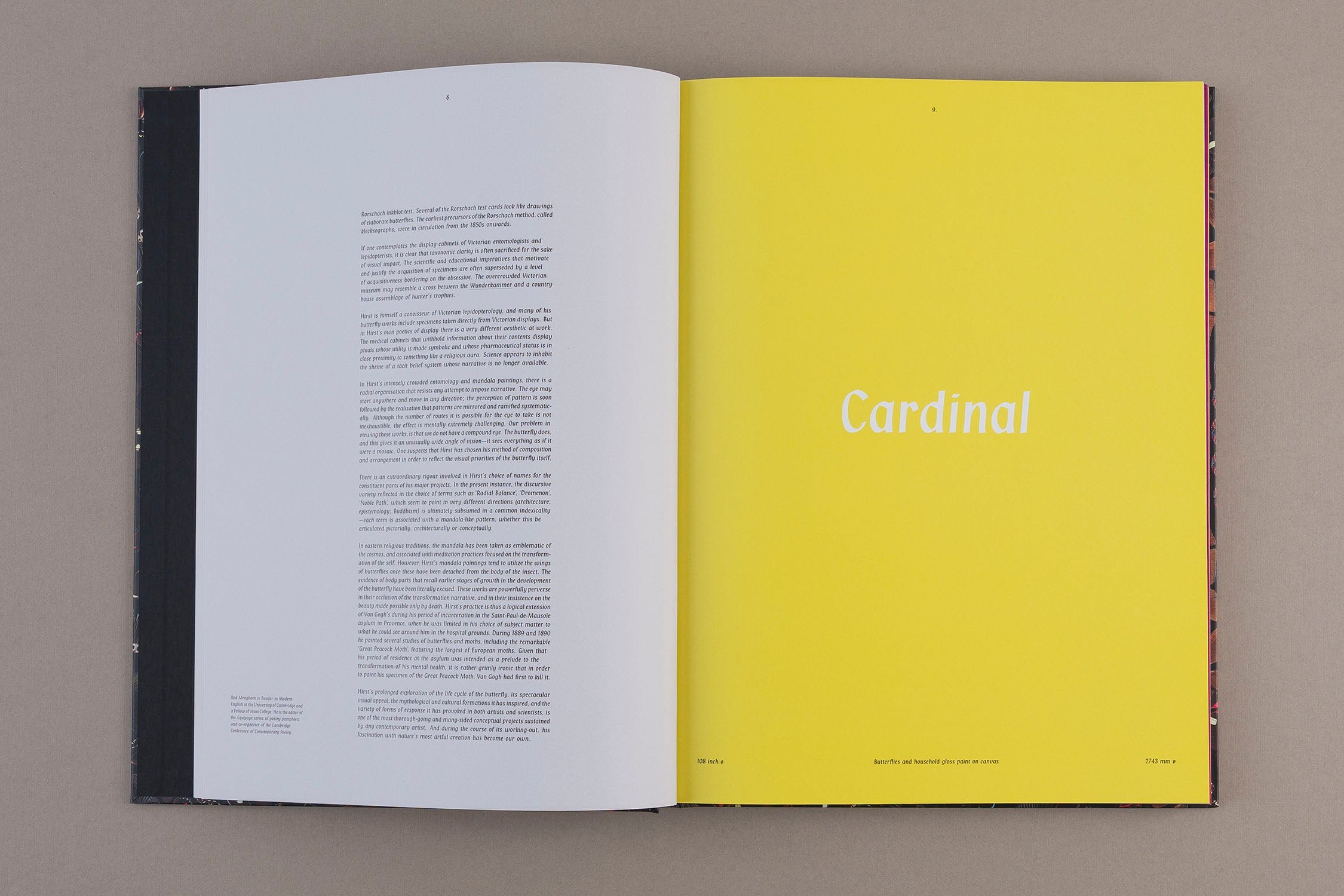
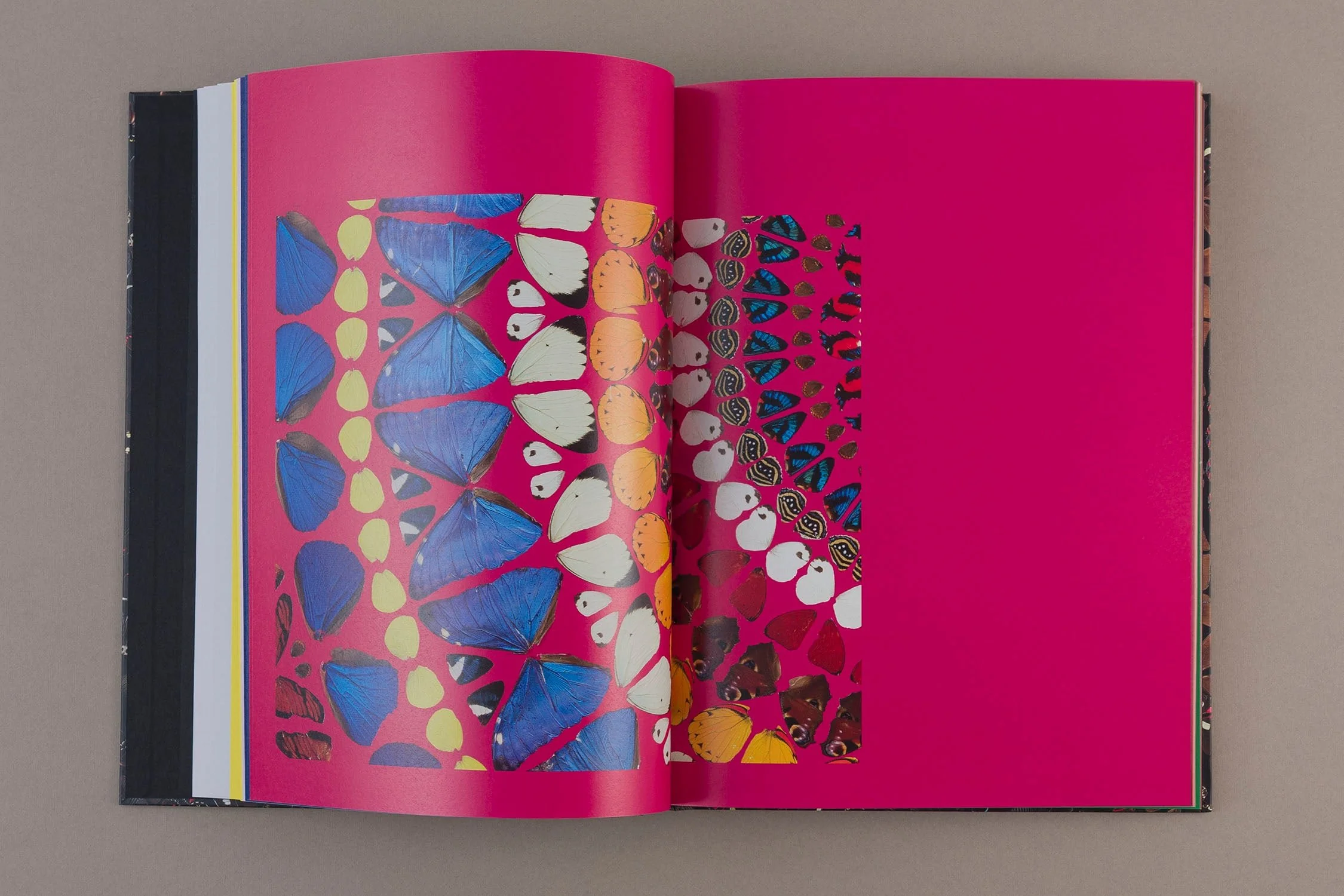
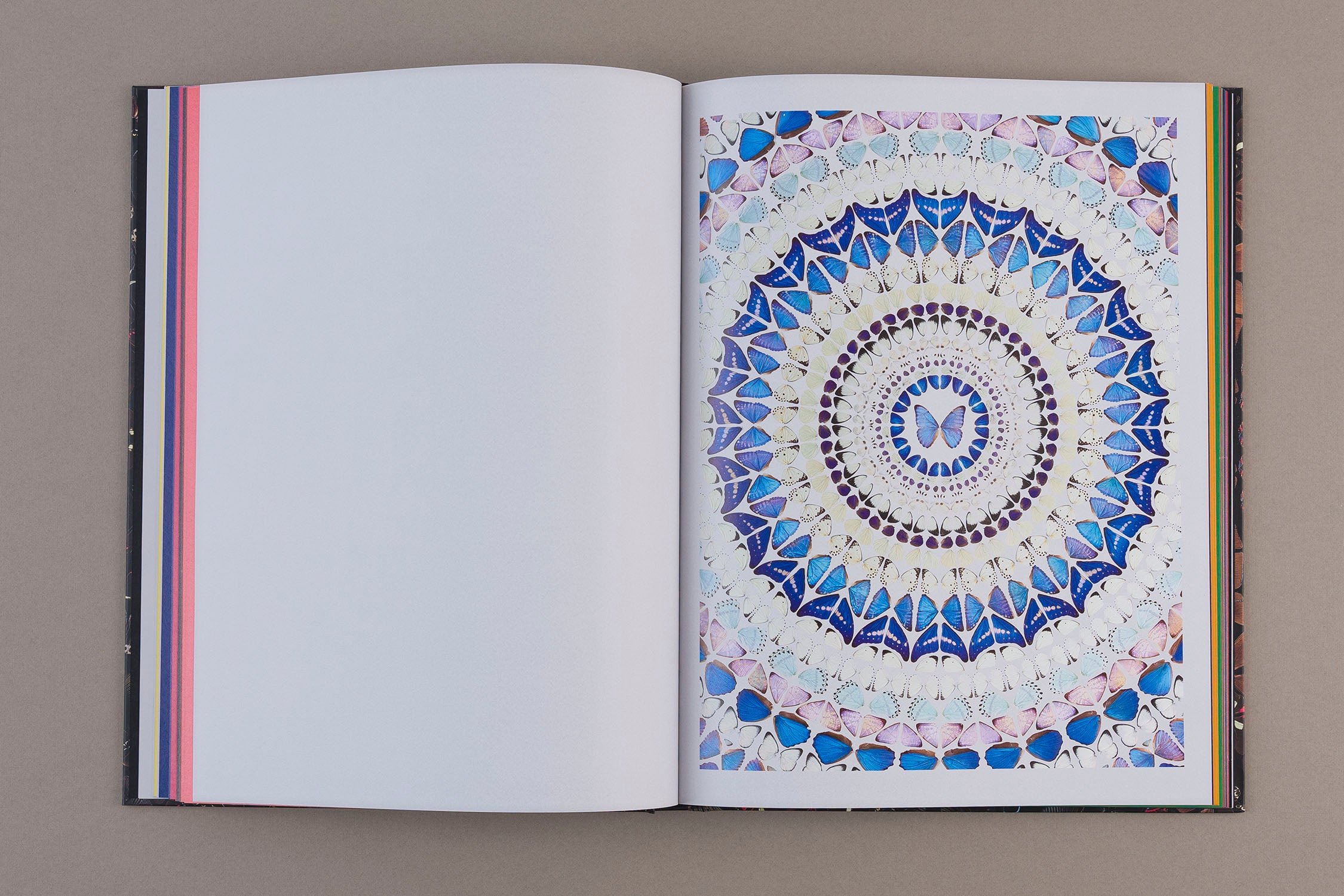
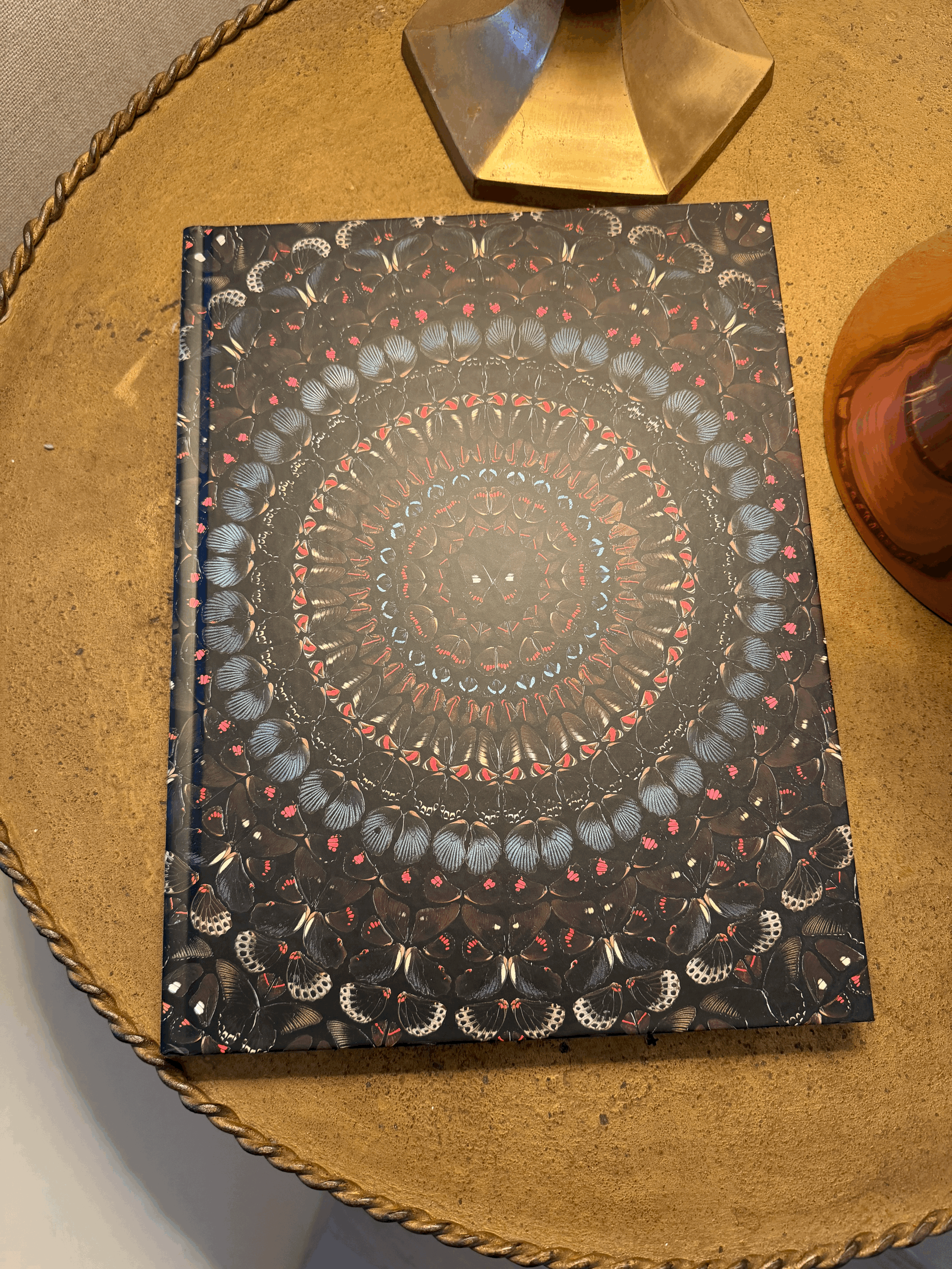
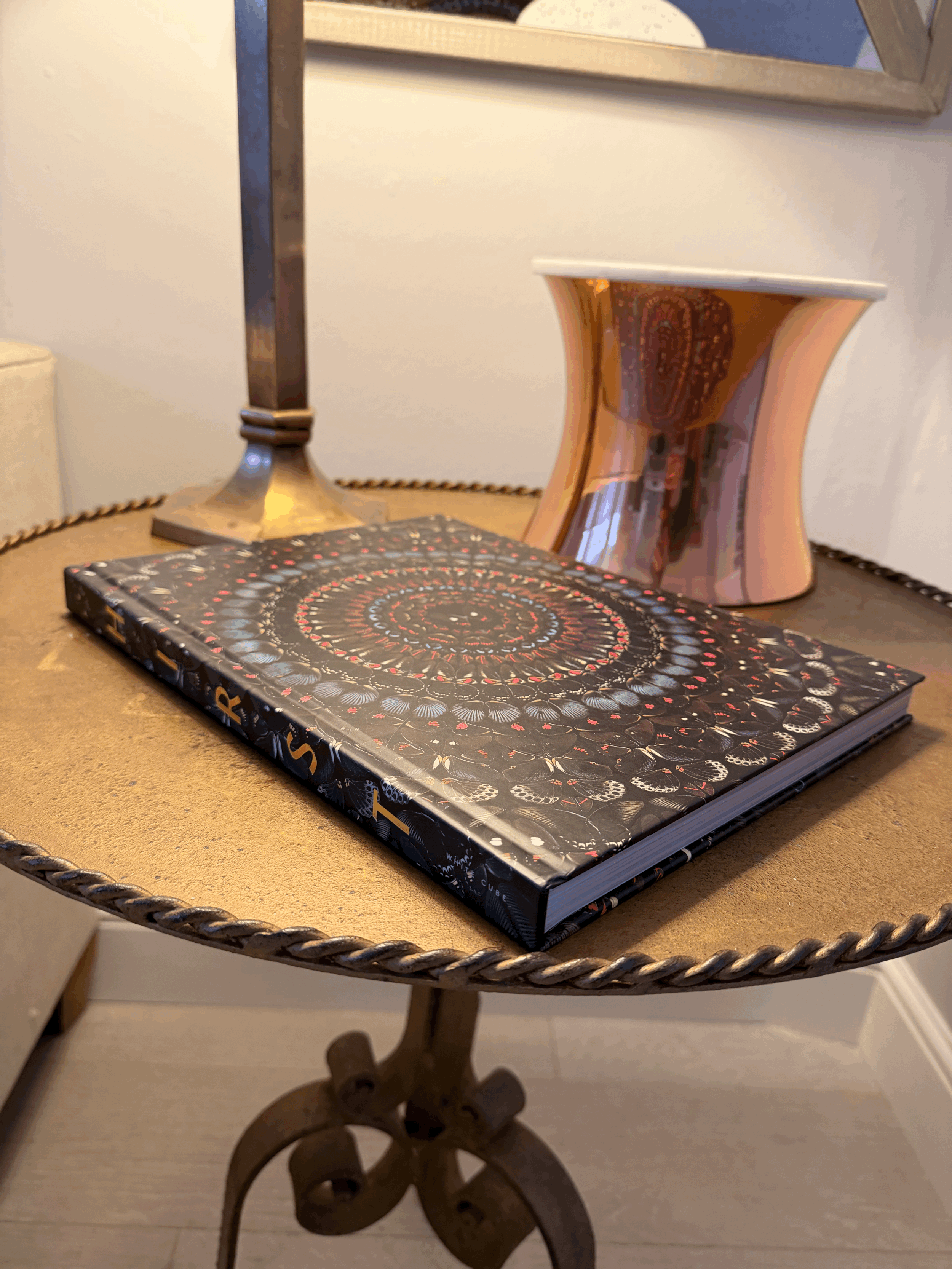
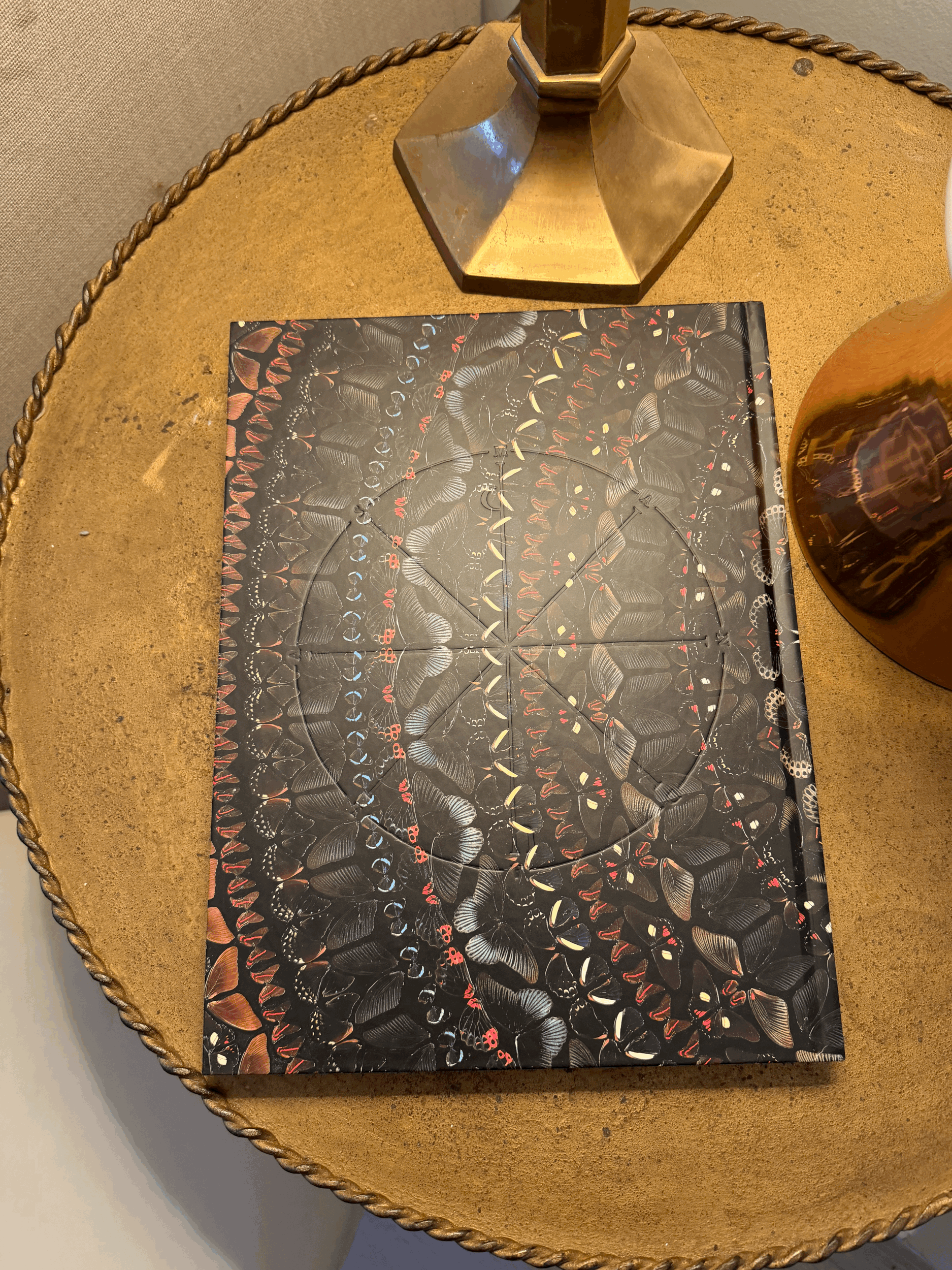
The book itself also shared these avenues. It was the context that informed how we would treat the book, as an object. Elements such as materials, colours, textures were all players to create this book with a classic iconography. The Linen bound cover, the deep embossed text and image, the black ink with the vibrant red of the front image, the paper for its ability to reproduce razor sharp text and superb clarity of imagery, and the sharp cuts of the serifs in the typography, to the overall graphic design and layout of each page and title. All these elements have been considered to create this book, to give it authenticity and to be our vessel to tell our story to you.
The question of the future of print is often followed by a declaration of love for tangible books – people want to share their passion for the smell and texture of paper, the ease of reading a book in bed or on the beach, the pride associated with a well stocked and organised bookshelf. Books are more than vessels for content, they are objects of fetishistic appeal to those who love them.
Technophiles dismiss this book-lust as sentimentality driven by fear of the new, and argue that the current generation raised on smart-screens will not yearn for the smell of old paper, or the satisfaction of reading one thing at a time. But there’s more to the appeal of books as objects than nostalgia. The form of a book – its size and shape, paper stock, printing, cover and binding – creates an experience of anticipation for the reader. There is a sense of ceremony in buying, borrowing or being given a book. More than evoking a simpler technological past, the physical book promises a new experience – one that will unfold in your hands, page by page.
We as artists have long understood the potential of the book form to do more than just display information and have published many books in small numbers to run along some of our bodies of work or exhibitions. They are documents, with all the vitality mentioned earlier of the printed page.
While distributing artworks and text in digital formats has the advantage of reaching potentially unlimited online communities, any artwork posted online becomes instantly downloadable, instantly sharable, instantly public property. Ownership is one of the great pleasures of physical books: your copy.
Holding a hand-made publication is even more intimate. Via the paper surface, the hands of the maker and the hands of the viewer are linked. For print lovers, this experience can never be replicated on screen.
A book is more than an object. It is not an object to us in the same way as a chair, a plate or a bicycle. Yes, you can hold it, feel it, smell it. Yes, it is a physical entity. But a collection of paper that you can see and touch is so clearly not all what a book is about. A book is a vessel. If we were to talk to you about a book, we would talk about the font, the paper, the cover; I would talk to you about what was inside it.
While a chair exists in one way or the other to sit on and a plate exists to be served food on, a book can teach, preach, entertain, scare. The thing that a book actually is, its essence, is beyond the object itself yet inextricably linked to it.
From the artist:
After 3 years we are so proud to present to you our book, our first monograph, entitled “Works”. It is a comprehensive overview of how we came to hold our position at the forefront of avant-garde functional art. It has been a journey, and we are still very much riding it. This book is a mark for us, looking back to the beginning, the fabulous years of studying at Saint Martins legendary university in London and taking this knowledge and excitement for the future and just putting our first gears in and slamming our feet on the gas.
As so often we chose the side road, the bumpy, muddy road to unchartered territories that lead us to discover more, learn from the mistakes, and all in all press even harder down on the gas. It was fast, it was fun, exhilarating as we, alongside a few of our contemporaries, paved a line in the world of art that back then didn’t have much of a curriculum and history. We believe it was in many ways the lack of references that forced us away from the commercial production and we were pulled into the freedom we felt the art world gave us. We were not always good at finding the words to communicate what we actually were doing, but we are damn good at analysing, self criticism and with a hefty dose of art history and a continuous hunger to research, we trusted the good old gut and beating hearts to move forward with what we believed would add more value to this world. In hindsight what we were actually doing was to formulate our totem, our manifesto of how this road of ours would be carved.
Over the years we have formulated two main chapters in our work. The first chapter being the rigid, mature, often architecturally brutal language that must stand in coherent symbiosis, to sit as a carrier for the second – a gestural, quasi-abstract explosive avenue of our work, which we are perhaps most known for.
The book itself also shared these avenues. It was the context that informed how we would treat the book, as an object. Elements such as materials, colours, textures were all players to create this book with a classic iconography. The Linen bound cover, the deep embossed text and image, the black ink with the vibrant red of the front image, the paper for its ability to reproduce razor sharp text and superb clarity of imagery, and the sharp cuts of the serifs in the typography, to the overall graphic design and layout of each page and title. All these elements have been considered to create this book, to give it authenticity and to be our vessel to tell our story to you.
The question of the future of print is often followed by a declaration of love for tangible books – people want to share their passion for the smell and texture of paper, the ease of reading a book in bed or on the beach, the pride associated with a well stocked and organised bookshelf. Books are more than vessels for content, they are objects of fetishistic appeal to those who love them.
Technophiles dismiss this book-lust as sentimentality driven by fear of the new, and argue that the current generation raised on smart-screens will not yearn for the smell of old paper, or the satisfaction of reading one thing at a time. But there’s more to the appeal of books as objects than nostalgia. The form of a book – its size and shape, paper stock, printing, cover and binding – creates an experience of anticipation for the reader. There is a sense of ceremony in buying, borrowing or being given a book. More than evoking a simpler technological past, the physical book promises a new experience – one that will unfold in your hands, page by page.
We as artists have long understood the potential of the book form to do more than just display information and have published many books in small numbers to run along some of our bodies of work or exhibitions. They are documents, with all the vitality mentioned earlier of the printed page.
While distributing artworks and text in digital formats has the advantage of reaching potentially unlimited online communities, any artwork posted online becomes instantly downloadable, instantly sharable, instantly public property. Ownership is one of the great pleasures of physical books: your copy.
Holding a hand-made publication is even more intimate. Via the paper surface, the hands of the maker and the hands of the viewer are linked. For print lovers, this experience can never be replicated on screen.
A book is more than an object. It is not an object to us in the same way as a chair, a plate or a bicycle. Yes, you can hold it, feel it, smell it. Yes, it is a physical entity. But a collection of paper that you can see and touch is so clearly not all what a book is about. A book is a vessel. If we were to talk to you about a book, we would talk about the font, the paper, the cover; I would talk to you about what was inside it.
While a chair exists in one way or the other to sit on and a plate exists to be served food on, a book can teach, preach, entertain, scare. The thing that a book actually is, its essence, is beyond the object itself yet inextricably linked to it.